Existing buildings · Load rating
No Load Sign on Your Phoenix Mezzanine? How to Find What It Can Carry
When a Phoenix building changes owners or tenants, a mezzanine may already be standing, and the load it was designed for is not always posted. Until that number is known, nobody can say what the deck may hold. This guide covers where the rating may be on record, what Phoenix's existing building code lets an older deck keep, and the work that can follow.
Why Does an Existing Mezzanine Need a Known Load Rating?
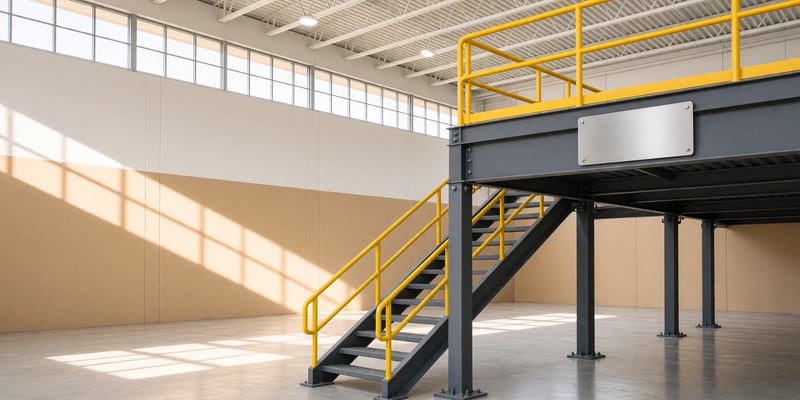
Because the code bans loading any floor past what it permits, and nobody can keep to a number they do not know. IBC 106.3 makes it unlawful to place a load on a floor "greater than is permitted by this code." In commercial and industrial buildings, Section 106.1 calls for durable signs wherever a floor's design live load tops 50 psf, and it bars anyone from removing or defacing them. A deck with no sign may be rated at 50 psf or less, or its sign may simply be gone.
Table 1607.1 puts light storage at 125 psf and office floors at 50 psf, so the use you plan sets the number you need. Our guide to choosing the right Table 1607.1 row explains each one.
Where Can You Find the Original Load Rating in Phoenix?
In the paper trail first: the structural drawings, the permit and the certificate of occupancy. A Phoenix structural drawing set lists the "Design Live Loads" in its general notes, because the City's submittal checklist asks for them. To see what the City holds, Phoenix takes public records requests that show whether a certificate of occupancy is on file for the address. The City says those requests typically take three to five business days. Owners, earlier tenants and the building's sale papers are the other places drawings turn up.
- The structural sheets: the design live loads in the general notes.
- The deck itself: a load sign, or the holes where one was fixed to a beam or column.
- The permit: its year points to the code edition in force when the deck went up.
- The steel: a certificate of compliance, where an approved fabricator made the parts (IBC 1704.2.5.1).
What If No Drawings or Load Sign Turn Up?
Then an engineer works out what the deck can carry from the steel that is standing. IBC 1708.1 calls for an "engineering assessment" wherever there is reasonable doubt about what a completed structure can carry, and says it may be "a structural analysis or an in-situ load test, or both." The analysis rests on the real materials and as-built conditions, and a registered design professional oversees any test load. The engineer records the members, connections, deck and base plates, and looks at the slab under the columns.
The result is a rating that can go on a sign. We bring the engineer to the site, then carry out the work the rating calls for.
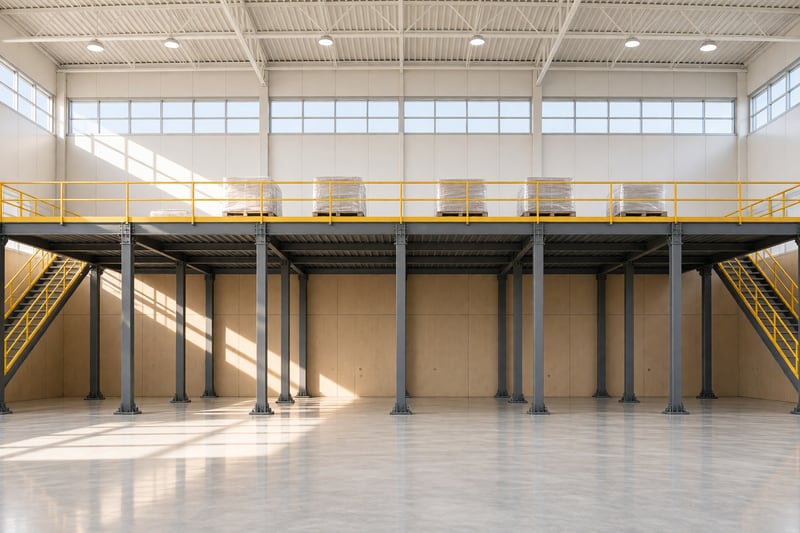
Can an Old Mezzanine Keep Its Original Rating in Phoenix?
Often, when it met the rules of its day and your use stays within that rating. Phoenix enforces the "International Existing Building Code as Amended by the City of Phoenix" for repairs, alterations, additions and changes of occupancy. Its Section 302.3 lets materials "in compliance with requirements or approvals in effect at the time of their erection or installation" stay in use unless the code official finds them unsafe. Section 304.1 adds that, where an alteration brings no higher design live load, existing members may be checked against the load approved before.
When that older load is lower than today's Table 1607.1 value, the area is "posted with placards of approved design indicating the approved live load." The deck keeps working at its own number, and the sign says what it is.
What If the Mezzanine Has to Carry More Than Its Rating?
Then today's loads apply to the members that carry the increase, and they are strengthened to suit. IEBC 304.1 says that where an alteration "results in increased design live load, the live load required by Section 1607 of the International Building Code shall be used." A change of occupancy brings the same test to the members under the changed area (IEBC 1006.1). An addition that raises gravity loads on existing members has them "replaced or altered as needed" to carry new-building loads (IEBC 1103.1). New members follow today's IBC detailing (IEBC 302.4.1).
All of it is alteration work, which needs a permit under IBC 105.1, and Phoenix asks for a structural evaluation with calculations on remodels and alterations.
Where Do the Load Signs Go Once the Rating Is Known?
On durable signs posted where that load applies, story by story. That is the IBC 106.1 rule for commercial and industrial floors designed above 50 psf, and a deck kept at an older, lower load gets placards under IEBC 304.1 instead. When a permit leads to a certificate of occupancy, Phoenix issues it only after the floor load signs are up (IBC 106.2). We fit the signs as part of the work on the deck.
How a storage deck is rated and signed from the start is on our warehouse storage platforms page.
What Work Can Follow the Rating Check?
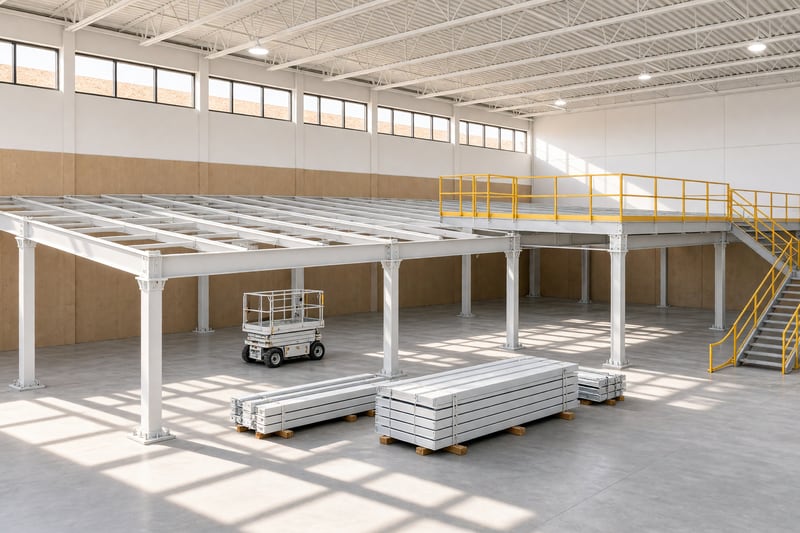
Whatever the deck needs to suit your plans: reinforcing, re-decking, more bays, signs, a move or a removal. Each is permitted work, and Valley permit records show owners doing it. A 2025 City of Mesa permit reads "Expand existing mezzanine area 1,540 SF to create storage area at existing warehouse with offices." Tempe issued a 2023 permit to relocate a mezzanine support column in a manufacturing area, and a 2022 City of Buckeye permit covered the expansion of an existing mezzanine within a building.
- Reinforce: added beams, joists or columns to lift the rating.
- Re-deck: a new surface on the old frame, once the engineer clears its weight.
- Extend: more bays, inside the one-third room limit (IBC 505.2.1).
- Sign: durable load signs at the rated or approved load.
- Move or remove: a bolted deck comes apart for a new building, and removal is permitted demolition.
Moves, expansions and removals are covered on our mezzanine relocation and removal page.
Questions About Existing Mezzanines in Phoenix
How do I find the load capacity of an existing mezzanine in Phoenix?
Check for a posted load sign, then the original structural drawings, whose general notes list the design live loads. Phoenix takes public records requests that show whether a certificate of occupancy is on file. If nothing turns up, an engineer assesses the standing steel and sets a rating.
Source: IBC 106.1, 1708.1; City of Phoenix submittal checklist; City of Phoenix, Certificate of Occupancy
Can an old mezzanine in Phoenix stay at its original rating?
Usually, when it met the rules of its day and your use does not raise the load. IEBC 302.3 lets compliant existing materials stay in use unless the code official finds them unsafe, and IEBC 304.1 allows the load approved before, posted on placards when it is lower than today's table.
Source: IEBC 302.3, 304.1 as amended by Phoenix
Is a load test used to rate an existing mezzanine in Phoenix?
It can be. Where there is reasonable doubt about what a finished structure can hold, IBC 1708.1 calls for an engineering assessment, made by calculation from the as-built steel, a load test in place, or the two together. Any such test runs under a registered design professional.
Source: IBC 1708.1, 1708.2
Does a mezzanine in a Phoenix warehouse need a load sign?
Yes, when the deck is designed for more than 50 psf in a commercial or industrial building. Durable signs go where the load applies, and removing or defacing them is unlawful. Storage decks start at 125 psf in Table 1607.1, so they always need one.
Source: IBC 106.1; IBC Table 1607.1
Sources, read November 2026: Phoenix Building Code 2024, Chapter 1, via UpCodes · Phoenix Building Code 2024, Table 1607.1, via UpCodes · Phoenix Building Code 2024, Chapter 17 special inspections, via UpCodes · Phoenix Building Code 2024, Section 505, via UpCodes · Phoenix Existing Building Code 2024, Chapter 3, via UpCodes · Phoenix Existing Building Code 2024, Chapter 10 change of occupancy, via UpCodes · Phoenix Existing Building Code 2024, Chapter 11 additions, via UpCodes · City of Phoenix, Commercial Building Permit Submittal Checklist (Rev. 06/25) · City of Phoenix, Certificate of Occupancy · City of Mesa open data, Building Permits (retired set) · City of Tempe, Permits Issued by Building Safety · City of Buckeye, permit records (EnerGov layer, City GIS)